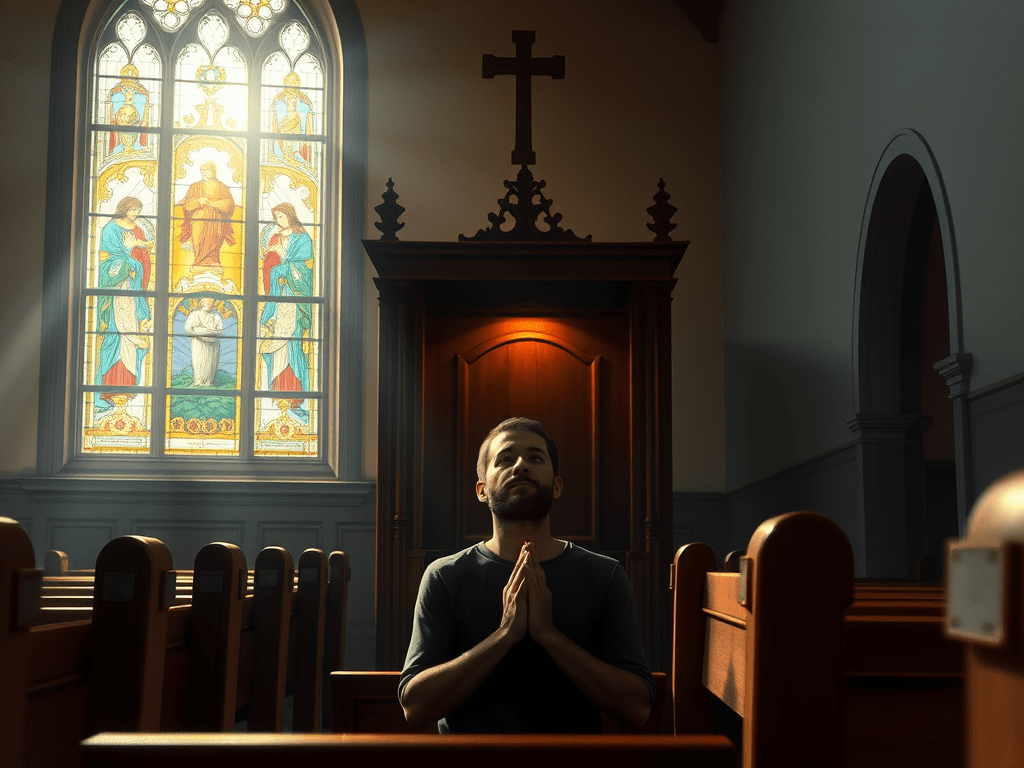
Confession is not simply a routine or obligation—it is a meaningful encounter with God’s mercy. At its heart is the desire to recognise our sins, take responsibility for them, and receive the grace to grow beyond them. A key part of this process is preparation, especially through a sincere examination of conscience.
Remembering Our Sins with Honesty
Before entering the confessional, we take time to reflect. This isn’t about guessing or vaguely listing “possible” faults—it’s about honestly recalling the sins we know we have committed. We acknowledge them, take responsibility, and express genuine sorrow. This reflection helps us enter Confession with clarity and purpose, ready to make good use of the sacrament.
When and How to Prepare
Preparation doesn’t require a special setting—it simply requires intention. You might spend a few quiet moments in prayer:
- In the car on the way to church
- Sitting in a pew for 5–10 minutes before Confession
- While waiting in line for your turn
In these moments, we turn our hearts toward God, asking for the grace to see ourselves clearly. This examination of conscience is a time of honesty, humility, and openness to God’s guidance.
Beginning Confession
When you enter the confessional, it is customary to begin by saying:
“Bless me, Father, for I have sinned. It has been [time] since my last Confession.”
Stating how long it has been since your last Confession is more than a formality—it provides helpful context. It allows both you and the priest to focus on a specific period of your life rather than revisiting the distant past unnecessarily.
If you are confessing anonymously, beginning with these words also lets the priest know you are present. Without that cue, there can occasionally be moments of silence where neither person realises the other is ready to begin.
Why Time Matters
Mentioning the time since your last Confession serves several purposes:
- For you: It helps you focus only on sins committed since your last Confession, assuming your previous confession was complete.
- For the priest: It offers insight into your spiritual habits and helps guide his counsel.
For example:
- If it has been a year, that may reflect someone fulfilling the Church’s minimum expectation.
- If it has been a month or six weeks, it may suggest a steady commitment to spiritual growth.
- If it has been only a week—or even a day—it could indicate strong devotion, or possibly scrupulosity, which the priest may gently address.
What About Forgotten Sins?
If you honestly forget a sin during Confession, you are not required to confess it later unless you commit it again. However, if you intentionally withhold a sin, it should be brought to your next Confession.
Confession is not about perfection in memory—it is about sincerity in intention.
Growing Beyond Scrupulosity
Confession is meant to bring peace, not anxiety. While frequent Confession can be a sign of devotion, it should not become driven by fear or an unhealthy fixation on sin. The goal is not to feel constantly burdened, but to grow in self-awareness, trust in God’s mercy, and freedom from sin.
A good Confession helps us:
- Recognise patterns in our lives
- Identify areas for growth
- Receive grace to overcome weakness
A Sacrament of Grace
Ultimately, Confession is about transformation. We come not just to admit our sins, but to receive forgiveness and the strength to live differently. By preparing well—through prayer, reflection, and honesty—we open ourselves more fully to the grace God offers.
Taking a few intentional moments before Confession can make all the difference. In that quiet space, we turn to God, acknowledge where we have fallen, and prepare to receive the mercy that leads us forward.





Thanks for your Visit Here, feel free to leave a comment 💟