Then I Discovered Something That Changed Everything!
Why are Protestant pastors becoming Catholic? After more than 40 years in Protestant ministry, I never imagined I would become one of them.
By Paula Rose Parish, MA | From Pulpit to Pew
I never imagined that one day I would become a Catholic.
In fact, for much of my Christian life, I believed things about the Catholic Church that I now recognise were profoundly mistaken.
I was a Protestant pastor for more than 40 years. I preached, taught theology, led congregations and served in Christian ministry across different countries.
And yes, there was a time when I preached against Catholicism!
So how on earth did I end up becoming Catholic myself?
Well, that is quite a story.
And I certainly didn’t arrive at my decision overnight.
Why Are Protestant Pastors Becoming Catholic?
Something fascinating happens when committed Protestant Christians begin investigating the historical foundations of Christianity.
Some discover that the Catholic Church is very different from what they were taught.
Others begin asking uncomfortable questions.
Who had the authority to interpret Scripture in the earliest centuries?
What did Christians believe about the Eucharist before the Protestant Reformation?
How did the first Christians worship?
And perhaps the most challenging question of all:
If Jesus Christ established His Church, where can we find its historical and apostolic continuity today?
These are not small questions.
For a Protestant pastor, they can challenge an entire theological framework.
They certainly challenged mine.
The Television Programme That Helped Change My Thinking
One of the influences on my journey was a programme on EWTN called The Journey Home, hosted by Marcus Grodi.
I found the testimonies fascinating.
Here were former Protestant pastors, theologians and committed Evangelical Christians explaining why they had entered the Catholic Church.
Some had once been deeply opposed to Catholic teaching.
Others had devoted years to defending Protestant theology.
Yet, after studying Church history, Scripture and the early Christian writers, they reached conclusions they had never expected.
I remember listening and thinking:
How could these intelligent, educated and sincere Christians change their minds so dramatically?
After all, these were not people who knew nothing about Christianity.
Many had spent decades studying and preaching the Bible.
And yet they had become Catholic!
I couldn’t simply dismiss their testimonies.
Instead, I began taking their arguments seriously.
Looking back, I believe God’s grace was already working in my life.
You can explore these conversion testimonies yourself through EWTN’s The Journey Home.
What I Discovered About the Early Church Shocked Me
As a Protestant pastor, I had been trained to interpret Christianity through a particular theological tradition.
I loved Scripture.
I believed in Jesus Christ.
I was passionate about preaching the Gospel.
But gradually, I began to recognise that my understanding of early Christianity was incomplete.
The more I explored the writings of the Church Fathers, the more questions emerged.
Consider St Ignatius of Antioch, writing in the early second century.
He spoke about the importance of bishops, the unity of the Church and the Eucharist in ways that sounded remarkably Catholic.
Then there was St Justin Martyr, whose description of Christian worship around AD 155 bears striking similarities to the structure of the Catholic Mass.
And St Irenaeus, who emphasised the continuity of apostolic teaching and the importance of the Church founded by the apostles.
These writers lived long before the Protestant Reformation.
They challenged my assumption that Catholic beliefs and practices were simply later inventions.
That was difficult to ignore.
The Eucharist Was a Turning Point
One of the most significant questions concerned the Eucharist.
For years, I had understood Holy Communion primarily through Protestant theological explanations.
But what did the earliest Christians believe?
When I read the writings of the Church Fathers, I encountered an understanding of the Eucharist that was far more sacramental than I had previously appreciated.
I also began revisiting John 6, where Jesus declares:
“I am the living bread that came down from heaven.” — John 6:51
The Catholic teaching on the Real Presence gradually became impossible for me to dismiss.
And that changed everything.
The Question of Authority I Could No Longer Avoid
Another major issue was authority.
As Protestants, we frequently emphasised the authority of Scripture.
And rightly so! Scripture is the inspired Word of God.
But I began asking a question that troubled me.
Who has the authority to interpret Scripture when sincere Christians reach contradictory conclusions?
Throughout my years in Protestant ministry, I had encountered many denominations, theological disagreements and competing interpretations.
Good, sincere, Bible-believing Christians often disagreed profoundly.
So how was I to understand Christ’s promise to His Church?
In Matthew 16:18, Jesus tells Peter:
“You are Peter, and on this rock I will build my church.”
I began examining Catholic teaching on apostolic succession, the authority of the bishops and the role of the Pope.
I discovered that Catholicism does not understand the Church as merely a collection of independent believers who happen to share similar convictions.
It understands the Church as a visible, sacramental communion established by Christ and entrusted to the apostles and their successors.
That understanding challenged my previous assumptions.
Becoming Catholic Cost Me More Than I Expected
People sometimes imagine that changing denominations is simply a matter of attending a different church.
For me, it was nothing of the sort.
After more than four decades in Protestant ministry, my identity was closely connected to being a pastor.
I had spent much of my adult life preaching, teaching, counselling and serving congregations.
My ministry was not simply a job.
It was a calling. It paid the bills.
Yet I came to believe that entering the Catholic Church was the next step in following Jesus Christ.
I had to surrender the ministerial role and title that had been part of my life for so long.
That was not easy.
There were personal, finacial, professional and emotional consequences.
And I knew that some people would struggle to understand my decision.
But I could not ignore what I had come to believe was true.
I had not stopped loving Jesus Christ. I had followed Him into the Catholic Church.
In July 2024, I was received into full communion with the Catholic Church.
It was one of the most significant decisions of my Christian life.
What About Catholics Who Become Protestant?
Of course, the movement is not entirely one-way.
Some Catholics become Protestants, and their stories deserve to be heard respectfully.
People change their religious affiliation for many reasons, including theological convictions, personal experiences and their understanding of Scripture.
I would never suggest that every Catholic who becomes Protestant does so because of hurt or misunderstanding.
That would be unfair.
But neither should we dismiss Protestant pastors who become Catholic as though they have simply abandoned their faith.
For many, including me, the journey involves years of prayer, study and difficult questions.
The important issue is not which side can claim the most converts.
The important question is: What is true?
Why Ancient Catholic Traditions Matter
One objection I often encountered as a Protestant was that Catholicism was burdened with traditions.
But I eventually came to understand that the word tradition requires careful examination.
Not every tradition has the same authority or origin.
The Catholic Church distinguishes Sacred Tradition, which transmits the apostolic faith, from customs and disciplines that can develop over time.
This distinction is important.
Catholic beliefs concerning the Eucharist, the sacraments, the Church’s ministry and the communion of saints are not simply matters of preserving old customs.
They belong to a much deeper understanding of how the Christian faith has been transmitted through history.
Of course, the Church’s doctrines have been articulated and developed over the centuries.
But Catholicism understands authentic doctrinal development as a deepening of the apostolic faith rather than the invention of a different Gospel.
I found that understanding increasingly persuasive.
And What About Mary?
Ah, Mary!
Now there’s a subject I once completely misunderstood.
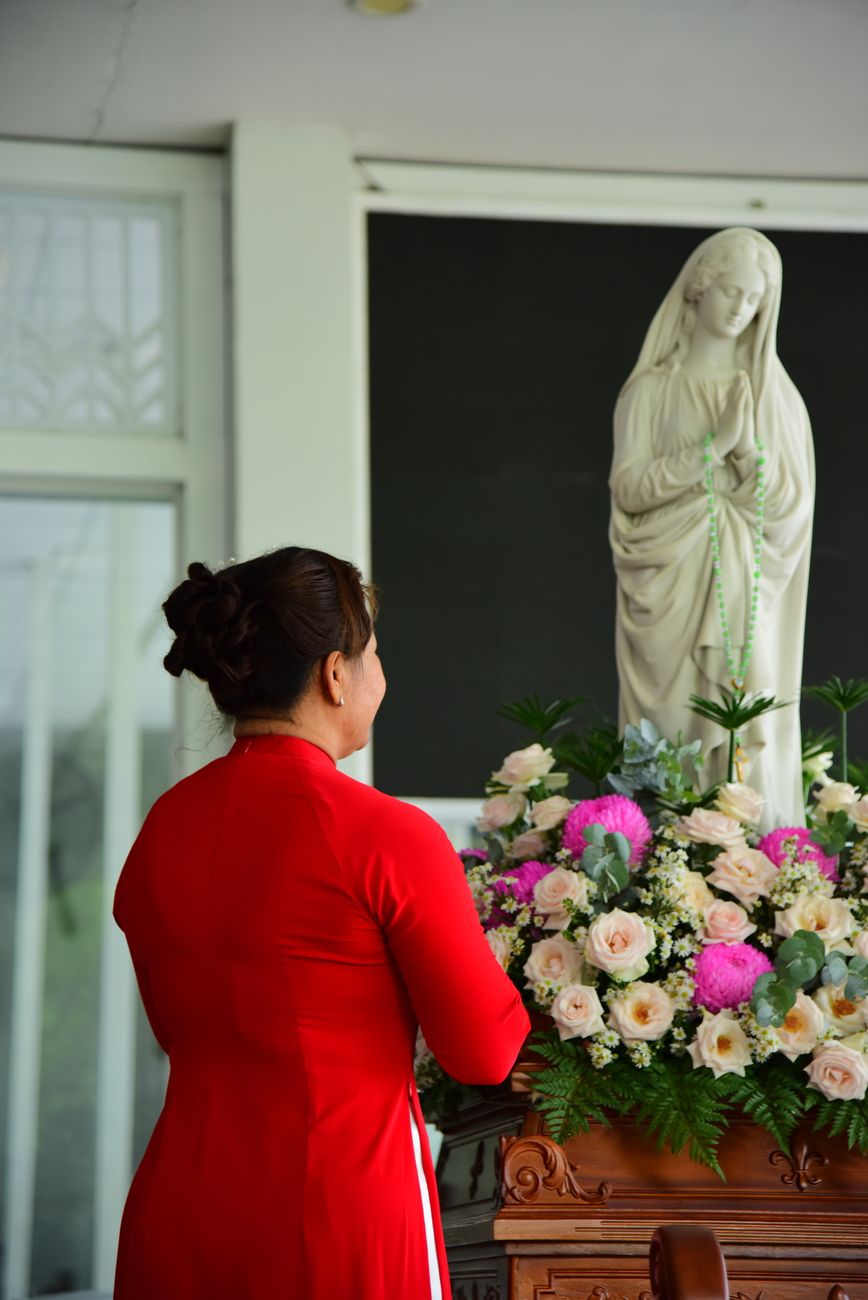
As a Protestant pastor, I believed Catholics worshipped Mary.
I now know that Catholic teaching makes a clear distinction between the worship owed to God alone and the honour given to Mary and the saints.
The Blessed Virgin Mary is honoured because of her unique relationship with Jesus Christ.
She is not a goddess.
She is not a replacement for Jesus.
And she does not compete with Him.
Her entire significance points us towards her Son.
Understanding that distinction removed one of my long-standing objections to Catholicism.
And it opened the door to a much richer appreciation of Mary’s place in salvation history.
I Didn’t Become Catholic Because I Stopped Being Christian
This is perhaps the most important point I want to make.
I did not enter the Catholic Church because I rejected Jesus Christ.
Quite the opposite.
I became Catholic because I wanted to follow Him more faithfully.
My journey was not a rejection of everything I had experienced in Protestant Christianity.
I remain grateful for the many wonderful Christians I encountered during those decades.
I am grateful for the biblical teaching, friendships, opportunities to serve and spiritual experiences that shaped my life.
But I also believe that God was leading me towards the fullness of Catholic faith.
And sometimes following Christ means being willing to reconsider convictions we have held for a lifetime.
That takes humility.
It takes courage.
And above all, it takes grace.
My Invitation to You: Investigate for Yourself
Perhaps you’re a Protestant Christian who has begun asking questions about Catholicism.
Or perhaps you’re a lifelong Catholic who has never really explored why the Church believes what she teaches.
Maybe you are not particularly religious but find these conversion stories fascinating.
Whatever your background, I encourage you to investigate.
Read the Scriptures.
Explore the writings of the early Church Fathers.
Study Church history.
And ask difficult questions.
Don’t simply accept what someone tells you about Catholicism — including me!
Discover what the Catholic Church actually teaches and why.
My journey from Protestant pulpit to Catholic pew was not something I planned.
But looking back, I believe God’s grace was guiding me through questions I once thought I had already answered.
And what an extraordinary journey it has been.
Now I’d Love to Hear From You!
Have you ever changed your mind about a deeply held religious belief?
Are you a Protestant exploring Catholicism?
Or perhaps you’re a Catholic who would like to understand the historical foundations of your faith more deeply?
Please share your thoughts or questions in the comments. I genuinely enjoy hearing about your experiences.
And if you would like to learn more about my journey from Protestant pastor to Catholic Christian, please explore my other articles and videos.
Thank you for supporting From Pulpit to Pew.
God bless you!
Paula Rose Parish, MA
Former Protestant pastor of more than 40 years, now a Catholic Christian.
Sources and Further Reading
- EWTN — The Journey Home — Conversion testimonies from Christians of different backgrounds.
- St Ignatius of Antioch — Letter to the Smyrnaeans — Early Christian teaching on bishops and the Eucharist.
- St Justin Martyr — First Apology — Chapters 65–67 describe early Christian worship and the Eucharist.
- St Irenaeus — Against Heresies, Book III — Apostolic succession and the transmission of Christian teaching.
- Catechism of the Catholic Church — See paragraphs 74–100 on Sacred Tradition, 1373–1381 on the Eucharist, and 971 on devotion to Mary.
- Second Vatican Council — Dei Verbum — The relationship between Scripture, Tradition and the Church’s teaching authority.
🍃YOUR WELLNESS MATTERS WEBSITE – https://paularoseparish.org/blog-2/
🍃YOUR WELLNESS MATTERS YOUTUBE-https://www.youtube.com/channel/UCvdQ4NPTNfXSnwd3pimPh0g
🔗https://paularoseparish.substack.com
🔗https://www.youtube.com/@PulpitToPew
🔗https://creators.spotify.com/pod/profile/paula-rose-parish/
❣️Never Forget: Jesus Loves You, and His Return is near. #youtube #catholicfaith #christianfaith #spiritualjourney #spiritualwriting #writingcommunity #christianity #writing #paularoseparish #pulpit #catholicchurch #shortsvideos #pastors #pupittopew


Thanks for your Visit Here, feel free to leave a comment 💟