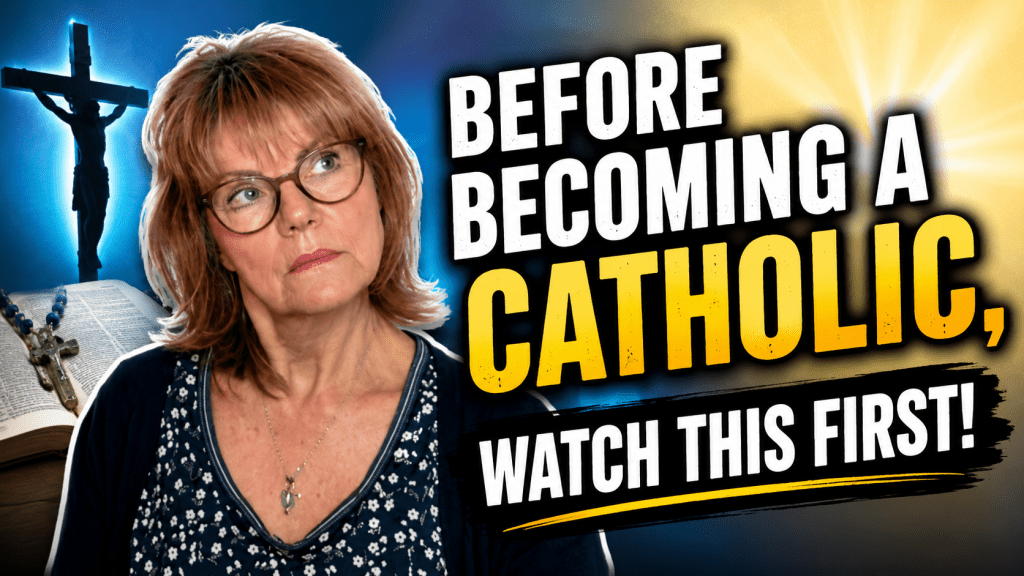
My Journey From Protestant Pastor to the Catholic Church
There was a time when I never imagined I would become Catholic.
In fact, as a Protestant minister, I spent years believing many of the same things countless evangelicals believe about the Catholic Church. I thought Catholics “worshipped Mary.” I questioned the role of priests. I struggled with the traditions, the rituals, and the authority of the Church itself.
And yet… here I am.
Not because I abandoned Jesus.
But because I pursued Him more deeply.
If you are thinking about becoming Catholic — or even just curious about it — I want to share a few things I genuinely wish someone had told me earlier.
Not to pressure you. Not to manipulate you. But to help you approach this journey honestly, prayerfully, and with open eyes.
Because becoming Catholic is not simply changing churches.
For many people, and for me, it changes everything.
Becoming Catholic Is Often Emotionally Costly
One of the hardest realities about converting to Catholicism is that it can affect relationships deeply.
Many converts experience misunderstanding from family, friends, church communities, and even spouses. Some people will assume you have “abandoned the Bible.” Others may accuse you of falling into legalism or ritualism.
As someone who once preached from the pulpit, I understand those concerns because I once shared them.
The emotional cost can be enormous.
You may feel isolated.
You may feel confused.
You may wonder if you are making a terrible mistake.
That’s why you need to move slowly, prayerfully, and carefully.
Don’t convert because Catholicism feels aesthetically beautiful.
Convert only if you become convinced it is true.
Church History Changed Everything for Me
The deeper I studied early Christianity, the more uncomfortable I became with the idea that Christianity existed for 1,500 years without the beliefs many modern churches now hold.
I discovered that the early Church Fathers spoke about:
- The Eucharist as the real Body and Blood of Christ
- Apostolic authority
- Confession
- Liturgical worship
- The importance of bishops
- Sacred tradition alongside Scripture
This shocked me.
I had assumed Catholicism added these things later.
Instead, I found traces of them everywhere in early Christianity.
That does not mean every question disappeared overnight. Far from it. But history forced me to wrestle honestly with what Christians had believed from the beginning.
And once you begin pulling on that thread, it becomes difficult to stop.
The Eucharist Became Impossible for Me to Ignore
If there was one doctrine that shattered my assumptions most deeply, it was the Eucharist.
Jesus did not say:
“This represents my body.”
He said:
“This is my body.”
For years, I interpreted Communion symbolically because that was the tradition I inherited. But studying Scripture alongside early Christian writings made me realise Christians for centuries believed Christ was truly present in the Eucharist.
Not metaphorically.
Not poetically.
But truly.
That realization changed my understanding of worship completely.
The Mass was no longer “empty ritual.”
It became something sacred, ancient, and profoundly Christ-centred.
Catholicism Will Challenge Your Pride
One thing I did not expect was how much becoming Catholic would expose my own pride.
Especially as someone who had taught others for years.
It is difficult to admit:
“Perhaps I misunderstood some things.”
That is humbling.
Catholicism challenged my individualism. It challenged my assumptions about authority. It challenged the modern idea that every believer simply interprets Christianity independently.
And honestly, that process can feel painful.
But sometimes spiritual growth begins with humility.
Don’t Romanticise the Catholic Church
This is important.
The Catholic Church is holy because Christ established it — but Catholics themselves are still human beings.
You will still encounter:
- Hypocrisy
- Scandals
- Political division
- Imperfect priests
- Disappointing parish experiences
If you enter Catholicism expecting perfection, you will eventually become discouraged.
Your faith must ultimately rest in Jesus Christ — not in the flawless behaviour of Christians.
Because no church community this side of heaven will ever be perfect.
Becoming Catholic Is Not About “Winning”
Sometimes online debates make conversion feel like joining a theological team.
But this journey should never be about ego, superiority, or proving others wrong.
For me, it became about surrender.
About following truth wherever it led — even when it made me uncomfortable.
Even when it cost me.
Even when I knew some people would misunderstand me forever.
What I Would Tell Anyone Exploring Catholicism
If you are considering becoming Catholic, here is my sincere advice:
1. Read Church History
Do not rely only on social media clips or debates.
Read the early Church Fathers for yourself.
2. Pray Constantly
Ask God honestly:
“Lead me into truth, wherever it is.”
3. Study Both Sides Fairly
Avoid caricatures. Listen to faithful Catholics and thoughtful Protestants alike.
4. Visit Mass Reverently
Observe carefully. Ask questions. Watch how worship is centred around Christ.
5. Be Patient
Conversion is often a process, not a single moment.
Final Thoughts
If you had told me years ago that I would one day sit quietly in a Catholic church after serving as a Protestant minister, I would never have believed you.
But God has a way of disrupting our certainty.
Sometimes faith is not losing Jesus.
Sometimes it is discovering Him more deeply than before.
If you are considering becoming Catholic, don’t rush.
But don’t ignore the questions either.
Truth is worth pursuing — even when the journey changes you.
If this article resonated with you, subscribe to my Blog here, and my YouTube channel, where I share my journey from Protestant minister to the Catholic Church, discussions on theology, faith, wellness, and honest conversations about spiritual transformation.


Thanks for your Visit Here, feel free to leave a comment 💟