Grief can leave scars, but it doesn’t have to control the rest of your life. A Christian perspective on loss, healing and finding hope again.
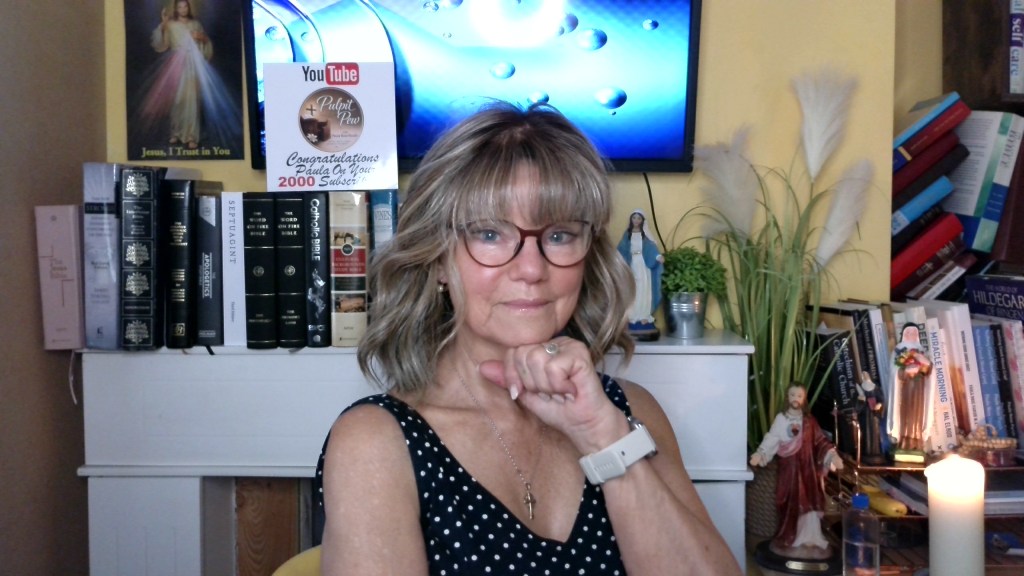
By Paula Rose Parish | From Pulpit to Pew
Hello everyone! ❤️
Today, I want to talk about something that affects every single one of us at some point in our lives. There a full video for you to enjoy below this article.
GRIEF.
And I want to challenge a message that I believe can leave grieving people feeling hopeless.
Prince Harry has spoken publicly about his experience of grief following the tragic death of his mother, Princess Diana. He has described himself as a student of grief and has spoken about learning to live with loss.
Now, I have enormous sympathy for anyone who loses a parent, particularly a child who must experience that loss under the scrutiny of the world’s media.
Nobody should minimise that suffering.
However, I take issue with the suggestion that we can never recover from grief.
Because after more than 40 years in Christian ministry, together with my background in counselling and pastoral care, I have come to believe something profoundly important:
We may never forget our loss, but we can recover, rebuild our lives and discover joy again.
And for me, Jesus Christ is central to that hope.
1. Grief Is Real — But It Doesn’t Have to Define Us
Over the years, I have conducted hundreds of funerals and accompanied grieving families through some of the most difficult experiences imaginable.
I have conducted funerals for babies who died suddenly.
For teenagers whose lives ended far too soon.
For young adults killed in tragic accidents.
For people who endured terrible illnesses.
And for elderly people who had lived long and fruitful lives.
Every loss is different.
Every family has its own story.
And every person responds to grief differently.
I have also experienced grief and loss in my own life.
So when I speak about grief, I am not discussing something I have simply read about in a textbook.
I am speaking from personal experience, academic study and decades of walking alongside people in their suffering.
And one thing I have learned is this:
Grief is not something we must remain trapped in forever.
We may carry memories and emotional scars, but that does not mean we cannot experience peace, happiness and purpose again.
2. Why I Question Celebrity Advice About Grief
We live in an age when celebrities have enormous influence.
A famous person makes a statement, and suddenly millions of people are listening.
But I want to ask an important question.
Does having experienced grief automatically qualify someone to advise others on how to recover from it?
I don’t believe it does.
Personal experience can be valuable. Indeed, it can help us understand and support others.
But personal experience is not the same as professional training in counselling, psychotherapy or bereavement care.
Prince Harry is entitled to share his own story, just as any of us are.
What concerns me is when one person’s experience is presented as though it applies to everybody.
If someone tells me that they have never fully recovered from a particular loss, I respect their experience.
But I would challenge the idea that nobody else can recover either.
That is simply too sweeping a conclusion.
We should also think critically about commercially promoted programmes offering emotional or psychological guidance, whether they are presented by celebrities, influencers or qualified professionals.
We need to ask what qualifications the presenters have, whether their advice is supported by evidence, and whether the programme offers appropriate safeguards.
Being famous does not automatically make someone an authority on grief.
3. We Can Carry the Scars Without Living in the Wound
Let me explain what I mean by recovery.
I am not suggesting that we should forget someone we loved.
Goodness me, no!
Nor am I suggesting that grief follows a neat timetable.
Some losses are devastating, and healing can take a very long time.
But I believe there is an important difference between remembering our loss and allowing that loss to dominate every aspect of our future.
We can remember someone with love and gratitude.
We can acknowledge that their absence still hurts.
We may even experience unexpected moments of sadness many years later.
And yet we can also laugh again.
Love again.
Find meaning again.
And look forward to tomorrow.
Recovery does not mean erasing the past. It means learning to live a meaningful life in which grief no longer controls everything.
That is the hope I want to communicate.
4. What Does Jesus Christ Teach Us About Grief?
As a Christian, I cannot separate my understanding of healing from my faith in Jesus Christ.
One of the most beautiful passages in Scripture comes from Isaiah 53:4, which speaks of the suffering servant bearing our griefs and carrying our sorrows.
Christ entered fully into human suffering.
He knew rejection, betrayal, physical pain and death.
And we must remember that Jesus Himself wept at the tomb of Lazarus (John 11:35).
Think about that!
The Son of God wept.
Grief is not a sign of spiritual weakness.
Tears are not evidence that we lack faith.
But Christianity also teaches us that suffering and death do not have the final word.
Through His death and Resurrection, Jesus Christ offers us hope that reaches beyond our present circumstances.
He tells us:
“You will know the truth, and the truth will make you free.” (John 8:32)
That freedom is not a promise that Christians will never suffer or that emotional pain will disappear immediately.
Rather, it gives us a foundation of hope upon which we can begin rebuilding our lives.
Christ does not ask us to pretend that our wounds do not exist. He invites us to bring those wounds to Him.
5. Grief Is Not Always About Death
This is something I explore in my book, Nothing Good About Grief: The Journey to Recovery with Psalm 23. – Available on Amazon.
When we hear the word grief, we naturally think about bereavement.
But grief can arise from many different kinds of loss.
The breakdown of a marriage.
The loss of employment.
A serious illness.
The end of a cherished friendship.
The loss of independence.
Or even the painful discovery that circumstances beyond our control have affected our opportunities in life.
I know something about this personally.
I discovered that I was dyslexic in my mid-fifties, after years of struggling with aspects of education without fully understanding why.
That discovery brought its own mixture of emotions.
There was relief in finally understanding something important about myself, but also sadness when I reflected on earlier struggles.
And then, much later in life, I experienced another enormous change when I left more than 40 years of Protestant ministry to become Catholic.
Although that decision was rooted in faith and conviction, it involved significant personal loss.
I had to leave behind a familiar identity, a title and a way of life.
Not all grief involves a funeral.
Sometimes we grieve the life we thought we would have.
6. Counselling Should Help Us Move Towards Healing
I hold a Master of Arts degree in counselling and have spent many years offering pastoral and counselling support.
In my own counselling practice, I believed it was important to work towards clear goals.
I would often begin with an agreed period of sessions and then review how things were progressing.
Were we making progress?
Were the strategies helpful?
Did we need to change our approach?
Was further support required?
The purpose was never to rush someone through their suffering.
It was to help them develop the resources, understanding and confidence to move forward.
Of course, some people need longer-term therapy, particularly following trauma or complicated bereavement. There is nothing inherently wrong with that.
But I believe good counselling should offer more than an opportunity to repeat the same painful story.
It should help us understand our grief and, where possible, develop ways to live more fully.
That might involve learning to manage overwhelming emotions, rebuilding routines, reconnecting with others or finding a renewed sense of purpose.
For Christians, prayer and spiritual support can also play an important part.
Faith and professional counselling need not be in competition.
Indeed, I believe the mind, body and soul are deeply connected.
And when we are grieving, all three may need attention.
7. Be Careful About Advice Concerning Psychedelic Drugs
Another concern I raise in my podcast is the public discussion surrounding psychedelic substances and emotional healing.
Prince Harry has spoken about his personal experiences with psychedelic substances.
However, personal testimony should never be confused with medical advice.
Research into psychedelic-assisted treatment is developing, but these substances carry risks, and their use requires careful medical, psychological and legal consideration.
They are certainly not something grieving people should experiment with simply because a celebrity has described a positive experience.
If you are struggling with prolonged or overwhelming grief, please seek support from an appropriately qualified healthcare professional.
There is no shame in asking for help.
And there is no reason to choose between responsible professional care and the comfort of Christian faith.
8. Why I Wrote Nothing Good About Grief
I wrote this book because I wanted to offer something that I believe grieving people desperately need.
HOPE.
Not false promises.
Not simplistic answers.
And certainly not the suggestion that if we pray hard enough, every painful emotion will disappear.
Rather, I wanted to explore how we can begin recovering from loss through faith, reflection, practical steps and a renewed understanding of our purpose.
Throughout the book, I draw upon Holy Scripture, particularly Psalm 23.
“The Lord is my shepherd; I shall not want.” (Psalm 23:1)
What a beautiful foundation for a journey through grief.
The Psalm does not pretend that dark valleys do not exist.
It acknowledges them.
But it also reminds us that we do not walk through them alone.
That is the message I want readers to take away.
You may be walking through a dark valley today.
You may feel exhausted, frightened or overwhelmed.
But the valley is not necessarily your permanent home.
There can be a way forward.
And you do not have to walk it alone.
9. Don’t Believe Everything You Hear — Even From Me!
There is a wonderful passage in Acts 17:11 describing the Bereans.
When the Apostle Paul preached to them, they examined the Scriptures to see whether what he said was true.
I love that!
They were willing to listen, but they also examined what they heard.
We need more of that today.
Whether we are listening to a royal, a celebrity, a psychologist, a priest, a pastor or someone like me, we should think carefully.
Ask questions.
Examine the evidence.
Consider the person’s experience and qualifications.
And when it comes to matters of Christian faith, return to Scripture and the teaching of the Church.
Critical thinking does not mean being unkind.
It means refusing to accept something simply because the person saying it is famous or influential.
My Final Message: You CAN Find Hope After Grief
Dear friends, if you are grieving today, I want to leave you with this thought.
Your grief is real, but it does not have to become your entire identity.
You may carry scars.
You may never forget what happened.
You may always miss the person you have lost.
But that does not mean you are condemned to a life without happiness, purpose or peace.
Recovery will look different for different people.
And for some, the journey will require substantial time, patience and professional support.
But please do not surrender the possibility of a meaningful future.
As Christians, we have a wonderful source of hope in Jesus Christ.
He does not promise us a life without suffering.
He promises that He will be with us.
And sometimes that assurance is the beginning of healing.
We can remember without remaining imprisoned by our memories.
We can grieve without giving up on life.
And, by God’s grace, we can begin again.
God bless you all,
Paula Rose Parish
From Pulpit to Pew
🎧 Listen to My Free Audio Podcast
In the accompanying audio podcast, I speak more candidly about why I disagree with some of Prince Harry’s public comments on grief, my experiences as a counsellor and former Protestant minister, and why I believe recovery is possible.
📖 My Book: Nothing Good About Grief
The Journey to Recovery with Psalm 23– Available on Amazon
My book explores loss, Christian hope and the journey towards recovery through Scripture and personal reflection.
It is written for those who are grieving and for those who want to support someone they love.
❤️ Join Me at From Pulpit to Pew
If you enjoy these reflections, please subscribe to my FREE Substack newsletter and my YouTube channel, From Pulpit to Pew, where I explore Christian faith, Catholic teaching, emotional wellbeing and the lessons I have learned throughout my life.
And please share your thoughts in the comments.
Do you believe it is possible to recover from grief while still carrying the memories of someone you love?
I would genuinely love to hear your perspective.
Please Remember that recovery does not necessarily mean the complete disappearance of grief. The central message of hope without implying that people who continue grieving have failed to heal.
AUDIO ONLY HERE: https://paularoseparish.substack.com/p/you-can-recover-from-grief-why-i?r=77gw2m&utm_campaign=post&utm_medium=web&showWelcomeOnShare=true






Thanks for your Visit Here, feel free to leave a comment 💟