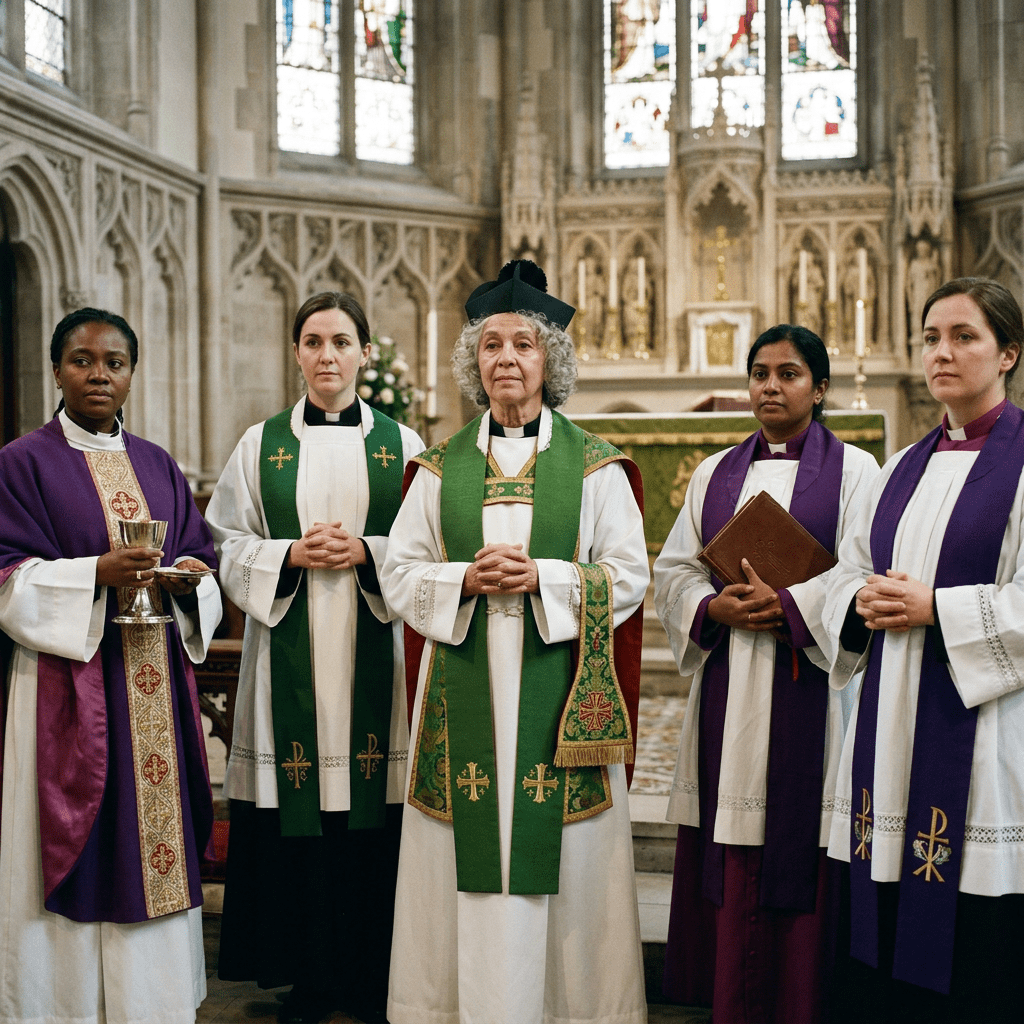
Focus Keywords: #WomenPriests #CatholicChurchTeaching #WomenOrdination #SpiritualAbuse #CatholicPriesthood #OrdinatioSacerdotalis #CatholicDoctrine
Why Campaigning for Women’s Ordination in the Catholic Church Can Be Considered a Form of Spiritual Abuse
Few topics generate as much debate within Catholic circles as the question of women’s ordination. While some campaign groups continue to advocate for women priests, the Catholic Church has consistently taught that it does not possess the authority to ordain women to the priesthood.
For many Catholics, this is not simply a matter of policy, culture, or discrimination. It is a matter of fidelity to Christ, Sacred Scripture, Apostolic Tradition, and the teaching authority of the Church.
Because of this, some theologians and faithful Catholics argue that actively encouraging women to pursue the priesthood within the Catholic Church can constitute a form of spiritual abuse. This is a strong claim, but one worthy of careful examination.
Author’s Perspective
My perspective on this subject is informed by both academic study and extensive ministerial experience.
I hold a Master of Arts in Counselling and Professional Development from the University of Derby (United Kingdom), where I specialised in the study of spiritual abuse within Christian contexts. My dissertation, Spiritual Abuse in the Judeo-Christian Church, was awarded a distinction and examined the dynamics of religious manipulation, authority, coercion, and the misuse of spiritual influence within ecclesial settings.
Since completing this research, my work has been referenced in theological and pastoral contexts, including Bible colleges, Christian publications, and ministry training settings. I have also presented on the subject of spiritual abuse at conferences, including an engagement in Philadelphia, and have provided consultation and pastoral guidance to individuals and organisations seeking to address the effects of spiritual manipulation within church environments.
In addition to my academic background, I served as an ordained Protestant minister for more than forty years, ministering across several countries and denominations. As a woman who has spent much of her life in Christian leadership, I have engaged deeply with questions surrounding vocation, ministry, authority, and ecclesial identity.
Following a lengthy period of theological study and discernment, I was received into the Catholic Church. This journey led me to a different understanding of ministry and priesthood. I came to recognise that while God unquestionably calls women to significant forms of ministry, service, leadership, teaching, evangelisation, and spiritual motherhood within the Church, this calling is distinct from the sacramental priesthood.
The Catholic Church teaches that the ministerial priesthood is not a matter of personal gifting, aspiration, or equality of dignity, but of sacramental vocation as established by Christ and entrusted to the Church. Consequently, I have come to accept that God does not call women to the sacramental priesthood because the Church itself lacks the authority to confer priestly ordination upon women. This conviction does not diminish the dignity or contribution of women; rather, it highlights the distinction between ministry and priesthood—a distinction that is essential to Catholic ecclesiology and sacramental theology.
It is from this combined perspective as a woman, former Protestant minister, researcher in spiritual abuse, and Catholic convert that I approach the question of women’s ordination and its implications for the spiritual well-being of the faithful.
What Is Spiritual Abuse?
Spiritual abuse occurs when religious authority, teaching, or influence is used in a way that manipulates, deceives, controls, or harms another person’s spiritual well-being.
According to the Catholic understanding, spiritual abuse can occur when individuals:
- Distort Church teaching.
- Encourage disobedience to legitimate ecclesial authority.
- Lead believers away from truth.
- Create false expectations about God’s will.
- Cause confusion regarding faith and salvation.
When a person is persuaded to invest years pursuing a vocation that the Church teaches is impossible, serious questions arise about whether that person has been spiritually misled.
The Catholic Church’s Teaching Is Not Merely a Discipline
Supporters of women’s ordination often compare the issue to priestly celibacy, arguing that disciplines can change.
The Catholic Church rejects this comparison.
Celibacy is a discipline.
Male priesthood is considered part of the Church’s sacramental constitution.
In 1994, Pope John Paul II issued the Apostolic Letter Ordinatio Sacerdotalis, declaring:
“The Church has no authority whatsoever to confer priestly ordination on women.”
He further stated that this judgment is to be “definitively held by all the Church’s faithful.”
The issue is therefore not whether the Church chooses not to ordain women, but whether Christ granted the Church authority to do so in the first place.
The Church says He did not.
Christ Chose Twelve Men
One of the central arguments of Catholic teaching is the example of Christ Himself.
Jesus elevated women in ways that were revolutionary for His time.
Women were among His closest disciples.
Women were the first witnesses of the Resurrection.
Women supported His ministry financially.
Women remained faithful at the Cross when many men fled.
Yet despite this, Jesus chose twelve men as Apostles.
The Church teaches that this choice was deliberate rather than accidental.
If Christ intended women to be ordained priests, He had every opportunity to establish such a precedent.
Instead, the apostolic ministry was entrusted to men.
The Apostles Followed Christ’s Example
The early Church continued this pattern.
The New Testament records women serving in important ministries:
- Teaching.
- Evangelisation.
- Hospitality.
- Prophecy.
- Works of charity.
Yet nowhere do we find women ordained to the ministerial priesthood.
Even in cultures where pagan priestesses were common, the Apostles did not ordain women as priests.
The Church sees this as evidence that it was following Christ’s intention rather than cultural pressure.
The Priest Acts In Persona Christi
Catholic theology teaches that the priest acts in persona Christi capitis—” in the person of Christ the Head.”
The priest sacramentally represents Christ, especially during the Eucharist.
The Church argues that the priest’s male identity is not a statement of superiority but part of the sacramental sign established by Christ.
Just as bread and wine are necessary elements for the Eucharist, the Church teaches that a baptised male is the necessary matter for priestly ordination.
A sacrament cannot be altered according to human preference.
How False Expectations Can Harm Women
One of the strongest arguments for viewing women’s ordination activism as spiritually harmful concerns the women themselves.
Imagine a woman being told:
- God is calling her to be a Catholic priest.
- The Church is unjustly blocking her vocation.
- Change is inevitable.
- Ordination is only a matter of time.
She may spend decades pursuing an impossible goal.
She may become increasingly frustrated with the Church.
She may lose trust in bishops.
She may abandon the sacraments.
She may eventually leave the Church altogether.
If the Church’s teaching is true, then such encouragement has not helped her discern God’s will—it has diverted her from it.
This is where I argue that spiritual abuse occurs.
A person is encouraged to pursue something that the Church definitely teaches
cannot happen.
Creating Division Within the Church
Another concern is ecclesial division.
The Church teaches that unity is one of its essential marks.
Campaigns that reject settled doctrine often place Catholics in opposition to:
- The Pope.
- Ecumenical councils.
- Sacred Tradition.
- The bishops in communion with Rome.
History shows that doctrinal dissent frequently produces confusion among ordinary believers.
Many faithful Catholics are left wondering:
- Has the Church changed?
- Can doctrine change?
- Who should I believe?
Such confusion can weaken confidence in the Church’s teaching mission.
The Example of Groups Claiming to Ordain Women
Several organisations have claimed to ordain women as Catholic priests.
The Vatican has repeatedly declared such ceremonies invalid.
Participants incur severe canonical penalties because the Church teaches no sacrament actually occurs.
Women involved in these ceremonies may sincerely believe they have been ordained.
Yet the Church maintains they have not received Holy Orders.
Again, I would argue that encouraging women to participate in invalid ordinations risks serious spiritual and emotional harm because participants are led to believe they possess a sacramental reality that the Church says does not exist.
Dignity Does Not Require Priesthood
A common assumption in modern culture is that equal dignity requires identical roles.
Catholic teaching rejects this idea.
The Church points to the Blessed Virgin Mary as the greatest human being after Christ.
Yet Mary was not an Apostle and was never ordained.
The Church therefore argues that holiness, authority, influence, and dignity do not depend upon priesthood.
Women have shaped Catholic history as:
- Saints.
- Mystics.
- Scholars.
- Missionaries.
- Founders of religious orders.
- Doctors of the Church.
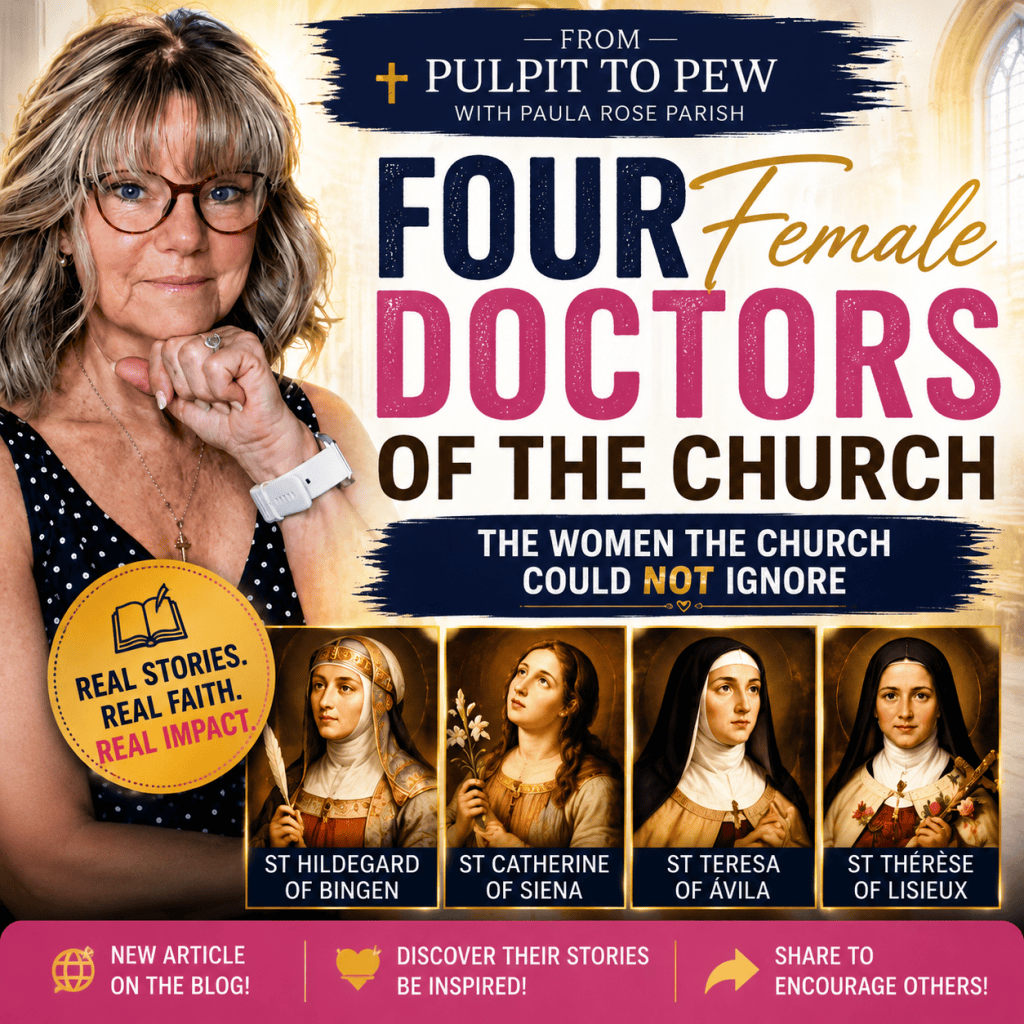
Among them are:
- Saint Catherine of Siena
- Saint Teresa of Avila
- Saint Thérèse of Lisieux
- Saint Hildegard of Bingen
History demonstrates that spiritual authority and influence within the Church have never been dependent upon priestly ordination. Some of the most influential figures in Christian history were women who profoundly shaped theology, spirituality, and Church life without ever becoming priests.
Among these remarkable Doctors of the Church and Saints- and they are women! They are Saint Catherine of Siena, Saint Teresa of Avila, Saint Thérèse of Lisieux, and Saint Hildegard of Bingen. Each exercised extraordinary spiritual influence through prayer, teaching, writing, reform, and faithful obedience to God’s call. Their impact continues to be felt throughout the Church centuries after their deaths.
These women stand as powerful examples that holiness, leadership, and spiritual authority do not require ordination. Rather, their lives demonstrate that God calls women to vital ministries that enrich the Church and advance the Gospel in unique and profound ways.
Their witness has inspired me to undertake a book project entitled The Calling, which explores the lives, ministries, and enduring legacy of these four Female Doctors of the Church. Through their stories, I hope to highlight the many ways women have shaped Christian faith and practice while remaining faithful to their distinct vocations within the Church.
If this subject interests you, I invite you to subscribe to this blog, ‘From Pulpit to Pew,’ and my YouTube Channel of the same name, for updates on the book’s progress, research insights, and future publication announcements.
A Pastoral Reflection
Catholics who support women’s ordination are often motivated by sincere concerns about justice, inclusion, and recognition of women’s gifts.
Those concerns deserve respectful engagement.
However, if the Church truly lacks authority to ordain women, then promoting the expectation that women can become Catholic priests risks leading people away from truth rather than toward it.
From this perspective, the issue becomes more than a disagreement about policy.
It becomes a matter of spiritual responsibility.
When people are encouraged to reject definitive Church teaching, to distrust legitimate authority, and to pursue a vocation that the Church teaches cannot exist, the resulting confusion and disillusionment can cause genuine spiritual harm.
For this reason, I very much believe and argue that campaigning for women’s ordination is not merely dissent—it can become a form of spiritual abuse, especially when vulnerable believers are persuaded to place their hopes in something the Church teaches is impossible.
References
- Ordinatio Sacerdotalis (1994), Pope John Paul II.
- Inter Insigniores (1976), Congregation for the Doctrine of the Faith.
- Catechism of the Catholic Church, §§1577–1580.
- Lumen Gentium, Second Vatican Council.
- Code of Canon Law, Canon 1024.
- Responsum ad Dubium Concerning the Teaching Contained in Ordinatio Sacerdotalis (1995), Pope Benedict XVI.
- Sacred Scripture: Mark 3:13–19; Luke 6:12–16; 1 Timothy 3:1–7; Titus 1:5–9.
- Spiritual Abuse within the Judeo-Christian Tradition: Implications for Practice (2009) Paula Rose Parish (M.A. Dissertation)




Thanks for your Visit Here, feel free to leave a comment 💟