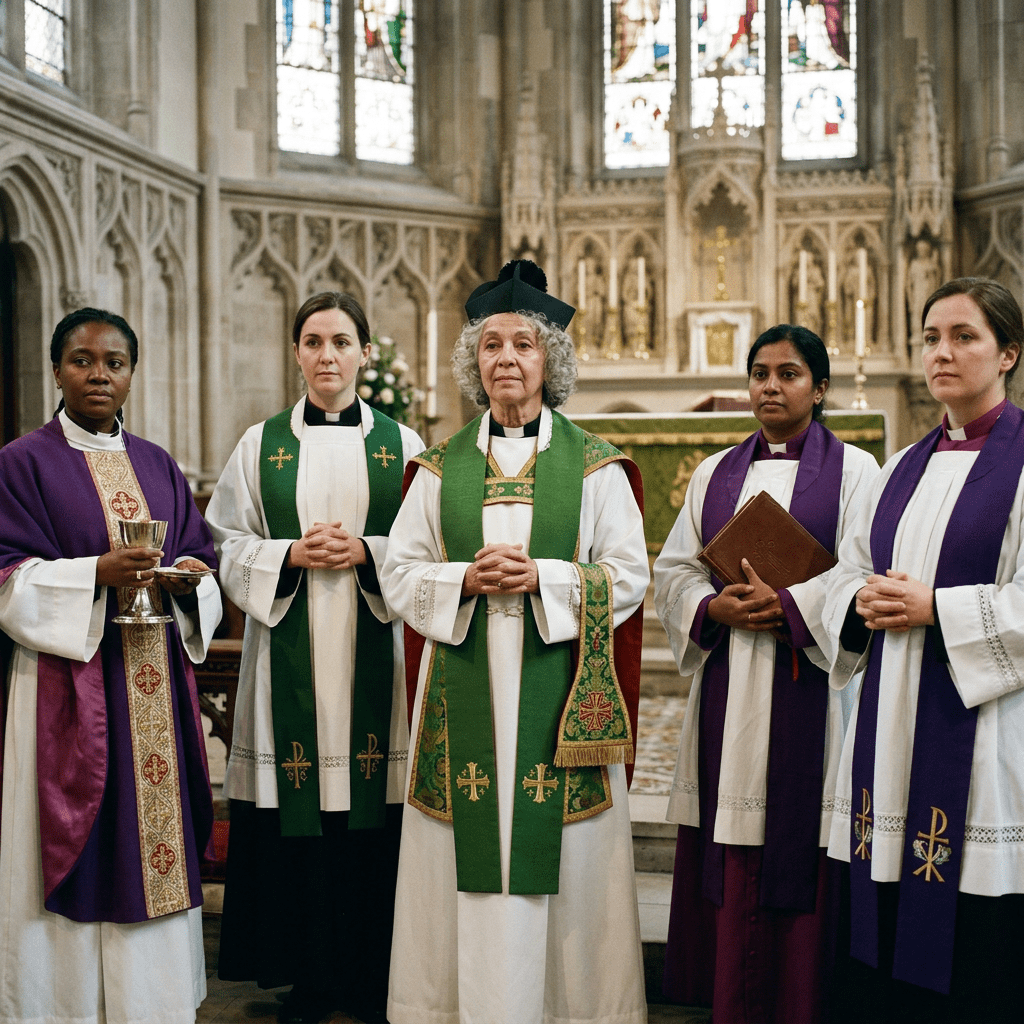
Why I Accepted That God’s Way for My Life Is the Catholic Way
By Paula Rose Parish
For over forty years, I served as a Protestant pastor.
I preached every week, led churches, conducted weddings and funerals, counselled families, discipled believers, and devoted my life to sharing the Gospel of Jesus Christ. Ministry was not simply what I did—it was who I believed God had called me to be.
Then everything changed.
After years of studying Scripture, Church history, and the teachings of the early Church, I became convinced that Jesus Christ had established the Catholic Church. Entering the Catholic Church meant more than changing denominations. It meant surrendering my own understanding to the authority Christ entrusted to His Church.
That surrender came at a cost.
As a Protestant minister, I was recognised as a pastor. In the Catholic Church, I would never become a priest.
Many people have asked whether I struggle with that.
The answer may surprise them.
Today, I have complete peace.
My Greatest Lesson Was Not About Priesthood
When I first began exploring Catholicism, I naturally viewed ministry through Protestant eyes.
In many Protestant traditions, the pastor occupies the central role. The success of a church is often measured by the gifts and leadership of its minister. It is understandable, then, that many assume becoming Catholic meant giving something up.
But I discovered something very different.
The Catholic Church taught me that the highest calling is not ordination.
The highest calling is holiness.
Every baptised Christian is called to become a saint.
That vocation belongs equally to men and women.
Why the Catholic Church Cannot Ordain Women
This is one of the most misunderstood teachings of the Catholic Church.
Many people assume that the Church refuses to ordain women because it undervalues them or because it has failed to modernise.
That was once my assumption too.
But after careful study, I realised the Church’s position is not based on culture, politics, or prejudice.
It is based on fidelity to Christ.
Jesus chose twelve men as His Apostles, despite repeatedly elevating women in ways that were revolutionary for His time. Women were among His closest followers. They remained faithful at the Cross when many of the Apostles fled. Women were the first witnesses of the Resurrection.
If Jesus had intended women to receive apostolic ordination, He had every opportunity to establish that pattern.
He did not.
The Church believes it has no authority to change what Christ Himself established.
As St. John Paul II taught in Ordinatio Sacerdotalis (1994):
“The Church has no authority whatsoever to confer priestly ordination on women.”
This teaching is not presented as a judgment on women’s worth but as a recognition of the limits of the Church’s authority.
Priesthood Is Not a Reward
One of the greatest misunderstandings in modern Christianity is the belief that ordination is a promotion.
It is not.
The priesthood is a sacramental vocation of service.
Likewise, marriage is a vocation.
Religious life is a vocation.
Consecrated virginity is a vocation.
Single life can be a vocation.
Each calling reflects a different aspect of God’s plan for His people.
They are not in competition with one another.
Women Have Always Been Central to the Church
When I entered the Catholic Church, I began noticing something I had largely overlooked before.
Women are everywhere.
They are theologians, catechists, teachers, missionaries, canon lawyers, parish leaders, spiritual directors, religious sisters, hospital chaplains, writers, musicians, educators, administrators, and mothers forming the next generation of Catholics.
The Church has also declared four women to be Doctors of the Church:
- St. Hildegard of Bingen
- St. Catherine of Siena
- St. Teresa of Ávila
- St. Thérèse of Lisieux
These women shaped Catholic theology without ever being ordained priests.
Their authority came from holiness, wisdom, and fidelity to Christ.
What I Had to Surrender
Perhaps the hardest part of my journey was not surrendering ministry.
It was surrendering control.
I had to admit that my own understanding might be incomplete.
I had to accept that obedience sometimes means laying down opportunities we genuinely love.
I left behind not only my title as a pastor but also my livelihood. As a woman entering the Catholic Church, there was no pathway to transfer into ordained ministry, unlike some of my male counterparts who have become Catholic priests under specific pastoral provisions.
Yet I have never felt more certain that I am exactly where God wants me to be.
My Ministry Did Not End
People sometimes ask me whether I miss being a pastor.
The truth is that God has simply redirected my ministry.
Today I coordinate a bereavement support group in my parish.
I write books.
I publish articles and blogs.
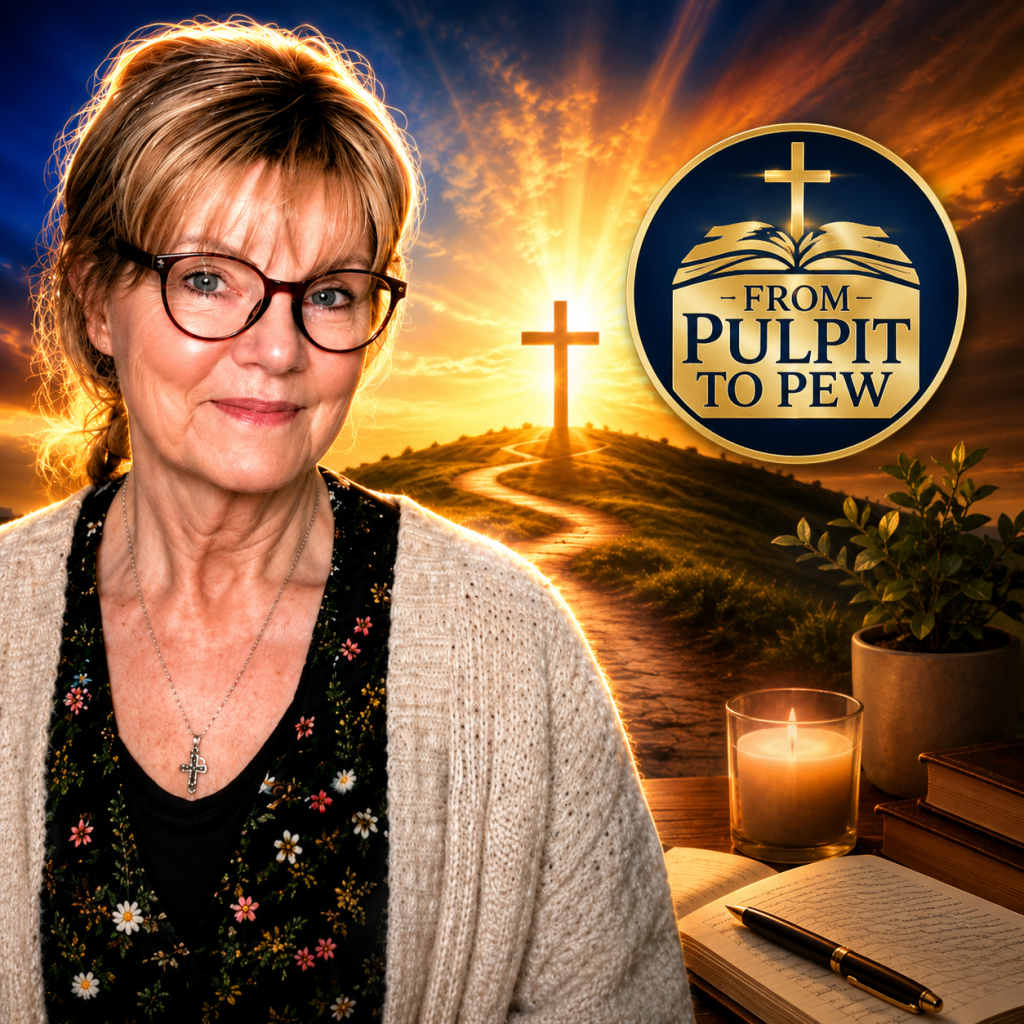
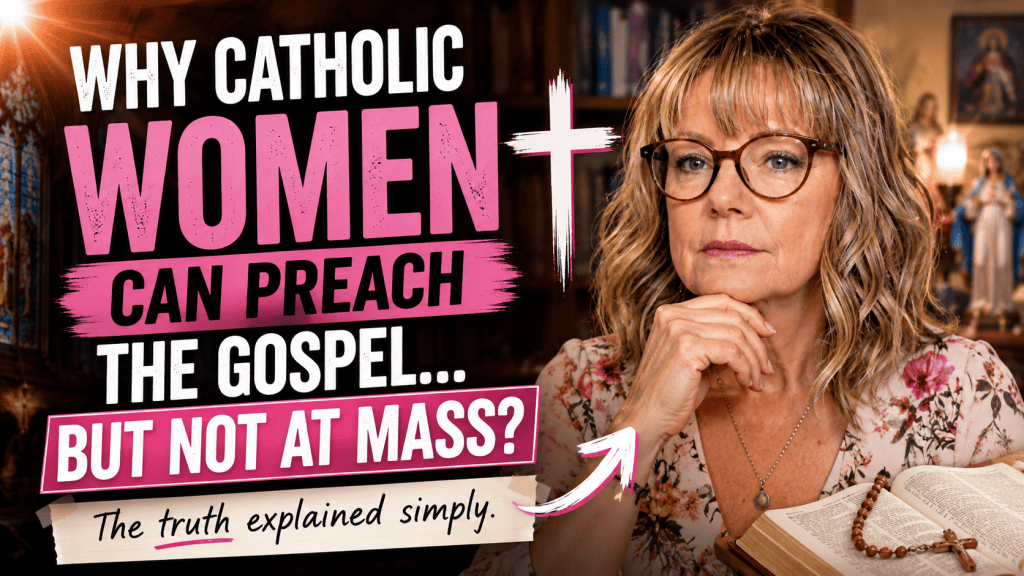
I teach through my YouTube channel, From Pulpit to Pew.
I serve as a diocesan catechist.
Most importantly, I strive to accompany others as they grow in their relationship with Jesus Christ.
I may no longer stand behind a Protestant pulpit, but God has opened doors I could never have imagined.
My Peace Comes from Obedience
Following Christ has never been about achieving my ambitions.
It has always been about trusting Him.
Sometimes obedience requires us to lay down our own plans in order to receive something greater.
That has certainly been true in my life.
The Catholic Church did not take ministry away from me.
It gave me a deeper understanding of what ministry truly is.
I no longer measure my calling by whether I wear a clerical collar.
I measure it by whether I am becoming more like Christ.
And that is a calling open to every Christian.
References
- Catechism of the Catholic Church, §§874–896, 1536–1600.
- St. John Paul II, Ordinatio Sacerdotalis (1994).
- Congregation for the Doctrine of the Faith, Inter Insigniores (1976).
- Vatican II, Lumen Gentium.
- Pope Benedict XVI, Jesus of Nazareth.



Thanks for your Visit Here, feel free to leave a comment 💟